R.O.A.D. Barbados Historic Handwriting Challenge
'/%3e%3c/svg%3e)
Helping Barbados
$25 000 USD
Closing soon! (3 days left)
Optical Character Recognition
Natural Language Processing
1984 joined
749 active
Start
03 Jul 26
Close
04 Oct 26
Reveal
05 Oct 26


Clarification on multi-line image labeling convention (train vs. test)
22 Jul 2026, 14:25 · 3
Hi all,
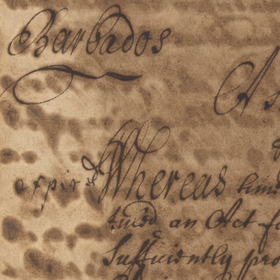
While going through the training images, I noticed that most multi-line images are labeled with only the text of the centered/main line, but a portion of the training set has labels that include the full multi-line text instead.
Before I invest time building special handling for multi-line cases, I'd like to clarify: for the test set, are multi-line images expected to follow the same mixed convention (i.e., some evaluated as center-line-only, some as full multi-line), or is there a single consistent rule that applies to test specifically?
Concretely:
- Are all multi-line test images scored against just the center line's text?
- Or could some test images require the full multi-line transcription, matching how a subset of the training labels are structured?
- If it's a mix, is there any way to anticipate which case applies to a given image (e.g., based on how the image was cropped), or should we treat it as ambiguous and design for both?
Any clarification would help before I decide how much engineering effort to put into detecting/handling multi-line cases specifically. Thanks!
yeah I noticed the same thing, and it is unclear what to do actually
Hi @youssefilo Thanks for letting us know. Could you share a few example IDs where you've found this please. We'll then investigate and come back with a more solid response re handling. Thanks very much!
For example, these two images contain multiple lines of text, and there are several other images with the same issue. Is it acceptable to exclude images like these? OCR models tend to capture all the text, which can lead to inaccurate or undesirable results.
Examples: